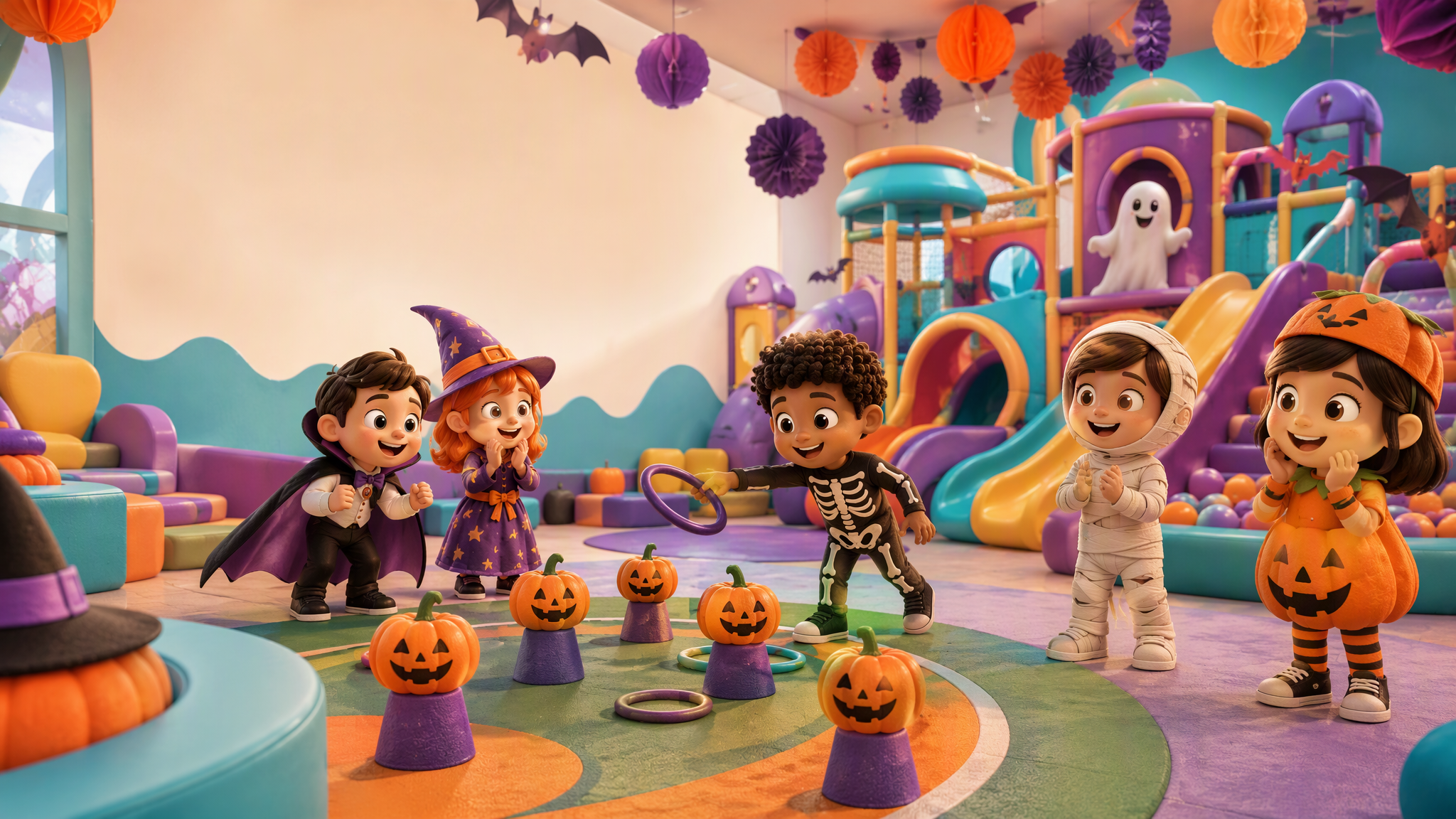
Halloween is often associated with costumes, decorations and sweet treats. Yet behind the excitement, a thoughtfully planned Halloween party offers something even more valuable. It gives children a joyful place to practise skills that support their growth.
When a child chooses a character, joins a group game, decorates a pumpkin or solves a clue with friends, learning happens naturally. There is no need for worksheets or formal lessons. The party itself becomes the classroom, and play leads the way.
Here is how Halloween fun can support a child's development.
1. Costumes turn imagination into communication
Putting on a costume invites a child to step into another world. A cape can inspire a story about courage. A scientist costume can lead to an imaginary experiment. A friendly monster can become the hero of an entirely new adventure.
During pretend play, children choose roles, invent situations and create shared stories with others. They practise expressing ideas, listening to different perspectives and adapting when a story changes. These moments support creativity, vocabulary, communication and flexible thinking.
Adults can encourage this process with open questions. Ask who the character is, what special ability the character has or where the character is going. The goal is not to direct the story. It is to give the child an invitation to tell it.
2. Party games build social and thinking skills
A simple game can offer a rich learning experience. Pumpkin ring toss, musical statues, treasure hunts and team challenges all invite children to participate in a shared activity.
Children practise taking turns, following rules, waiting patiently and responding when things do not go as expected. They also remember instructions, make choices and adjust their strategies. These are important parts of executive function and self regulation.
Cooperative games are especially valuable. Try a treasure hunt where everyone must contribute a clue before the group can succeed. This shifts the focus from winning alone to listening, helping and achieving something together.
3. Friendly spooky moments support emotional growth
Halloween introduces unusual sights, sounds and surprises. In a safe and supportive setting, children can explore feelings such as excitement, uncertainty and curiosity at their own pace.
A child may feel brave while entering a decorated room with friends. Another may prefer to watch before joining. Both responses are valid. When adults acknowledge feelings without judgment, children learn that emotions can be noticed, discussed and managed.
The goal is never to pressure a child into enjoying something frightening. Offer choices, explain what to expect and provide a calm space for breaks. Feeling secure gives children the confidence to explore.
4. Crafts and movement strengthen body and mind
Halloween activities can support physical development in many ways. Decorating pumpkins with markers, placing stickers, folding paper decorations and building a cardboard castle encourage hand control and coordination. Counting seeds or sorting decorations by color and size can also introduce early math ideas.
Movement activities support a different set of skills. Dancing, crawling through a play tunnel, balancing along a path and tossing soft beanbags help children develop coordination, spatial awareness and body control.
The best activities invite children to use both their bodies and their imaginations. A movement course becomes even more engaging when children pretend they are crossing a magical forest or helping a friendly ghost find its way home.
5. Shared celebrations grow confidence and belonging
A party gives children many small opportunities to feel capable. They might greet another family, share materials, show a creation or join a song. Each successful moment can strengthen confidence.
Inclusion makes these opportunities available to more children. Costumes can be optional. Activities can offer different ways to participate. A child who does not want to perform can still contribute by choosing music, holding a clue or helping a friend.
When every child is welcomed without pressure, the party becomes more than entertainment. It becomes a community experience.
Simple party stations with a learning purpose
1. Costume story circle
Invite children to introduce their characters and add one sentence to a group story. This encourages language, listening, creativity and respectful participation.
2. Pumpkin design studio
Provide small pumpkins, washable markers and large stickers. Children can create faces or patterns while practising hand control and making independent choices. Adults should handle all carving.
3. Monster movement trail
Create a gentle course with tunnels, soft obstacles, balance paths and a dance finish. Children can move through it at their own pace while building coordination and confidence.
4. Team treat quest
Hide picture clues around the party area and ask the group to solve them together. Finish with a shared reward so every child experiences the value of cooperation.
Safety makes learning possible
Children learn best when they feel safe. Check that costumes and shoes fit well, keep vision clear, avoid sharp accessories and use battery powered lights instead of open flames. Offer nonfood treats where possible and plan carefully for food allergies. Keep small items and unsuitable treats away from babies and toddlers.
Active supervision, clear boundaries and a quiet place to rest help the celebration stay enjoyable for everyone.
The greatest treat is growth through play
A Halloween party does not need a formal educational program to support development. Children learn when they imagine, communicate, move, create and connect with others.
At indoor50kids.com, we believe the best celebrations give children room to do all of these things. This Halloween, the greatest treat may be the confidence and skills children carry with them long after the decorations come down.